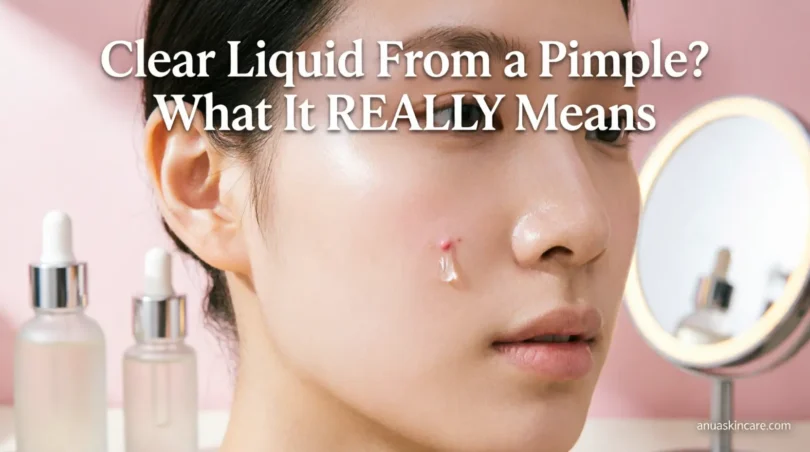

Clear Liquid From a Pimple: What It Is, Why It Happens, and What You Should Do
You press on a pimple expecting the usual thick white or yellow stuff, and instead a watery, clear liquid comes out. It looks different. It feels different. And now you are wondering whether something is wrong with your skin or whether this is just a normal part of how pimples work.
The confusion is completely understandable. Most skincare content focuses on pus and bacteria but rarely explains the clear fluid that drains from a pimple in enough detail to actually be useful. This article covers everything — what the fluid is, why some pimples produce it instead of pus, what different colours mean, when to worry, and exactly what you should do at each stage.
What Is the Clear Liquid That Comes Out of a Pimple
The clear fluid that comes out of a pimple is called serous fluid, sometimes referred to as serum or interstitial fluid. It originates from blood plasma and is produced naturally by your body as part of its inflammatory healing process whenever tissue is stressed, damaged, or fighting off bacteria.
Serous fluid is composed of water, electrolytes, glucose, proteins, and antibodies. It does not contain red blood cells, which is why it appears clear or faintly straw-coloured rather than red or cloudy. When your immune system detects a blocked follicle or bacterial activity, it sends white blood cells to the area. Those cells travel in serous fluid, and when the follicle wall is pressed or breaks, that fluid leaks out.
This is why a pimple with no pus just clear liquid is still an active inflammatory event. The absence of visible pus does not mean the pimple is healed or harmless. The follicle wall is compromised and the immune system is actively working in that tissue.
Why Some Pimples Produce Clear Fluid Instead of Pus
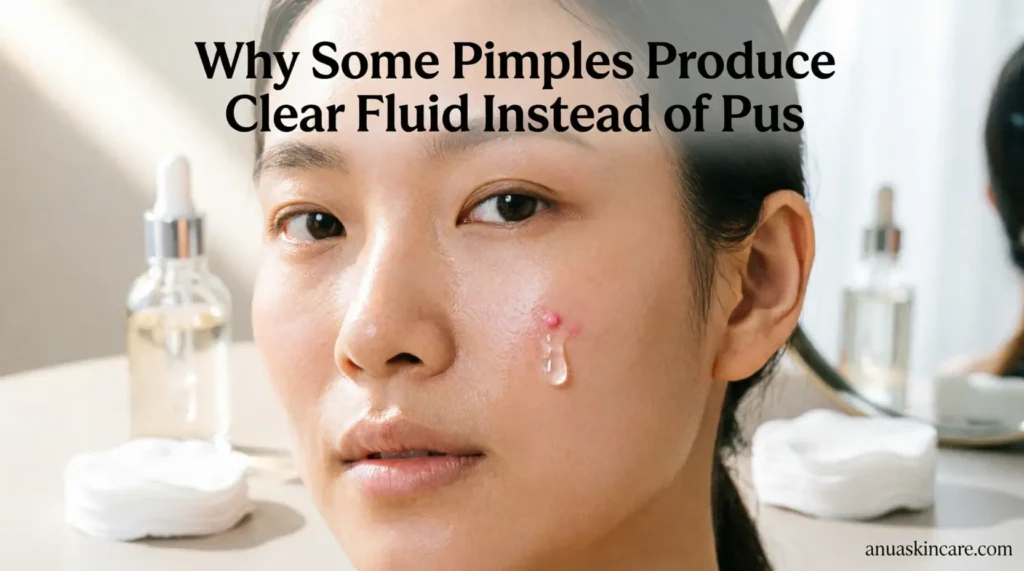
This is the question most skincare articles skip entirely, yet it is exactly what most people want to understand. Pus forms when neutrophils — a specific type of white blood cell — die in large numbers fighting bacteria inside the follicle. Their remains, combined with dead skin cells and bacterial debris, create the thick white or yellow material recognised as pus. But not every pimple involves the same level of bacterial activity, and not every pimple reaches the pus stage.
The Pimple Is in an Early Inflammatory Stage
Before the immune response has fully activated, the fluid inside a forming pimple is mostly serous fluid with very little bacterial accumulation. Pressing on a pimple at this stage releases only clear liquid because the pus simply has not had time to form. The inflammation is underway, but the immune cell die-off that creates visible pus has not yet occurred.
The Pimple Is Hormonally Triggered
Many people notice that pimples appearing before their period or during hormonal shifts produce clear fluid rather than pus. Hormonal fluctuations — particularly the rise in progesterone and androgens before menstruation — stimulate sebaceous glands and increase inflammation sensitivity in the skin without triggering the same level of bacterial colonisation that causes classic pustular acne. The follicle swells with interstitial fluid driven by hormonal signalling, not a heavy bacterial infection.
The Inflammation Is Superficial or Mild
Micro-comedones and early whiteheads sitting close to the skin surface may only accumulate serous fluid without enough cellular debris to generate visible pus. These are shallow blockages where the immune response is present but modest.
The Pimple Has Already Partially Drained
If a pimple has been pressed against a pillowcase, rubbed by clothing, or squeezed previously, some internal content may have already discharged. What continues to seep out is mostly serous fluid. The pus was expelled first; the clear liquid coming out of the pimple afterward is the residual inflammatory carrier fluid.
Cystic Acne and Deeper Follicle Involvement
Cystic acne forms in deeper skin layers and tends to generate larger pockets of serous fluid because the inflammatory response affects the dermis rather than just the surface layer. When cystic pimples are disturbed, the fluid that drains is often predominantly clear because the cyst structure holds fluid at volume rather than concentrating bacterial debris the same way a surface pustule does.
Types of Discharge From a Pimple and What Each One Means
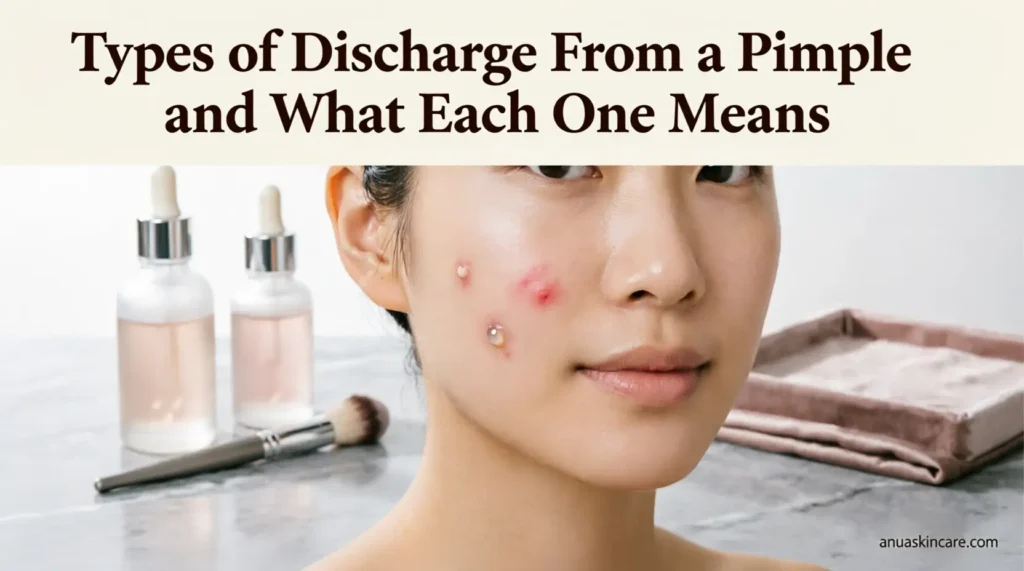
The colour and consistency of what comes out of a pimple tells you something specific about what is happening inside the follicle.
- Clear or watery fluid: Serous fluid produced during early or mild inflammation. Bacterial infection is minimal or not yet established. Your skin is reacting to a blocked follicle, hormonal changes, or minor irritation.
- White or creamy fluid: Classic pus made up of dead neutrophils, bacteria, and cellular debris. Signals an active bacterial infection inside the follicle. Most common in papules and pustules.
- Yellow fluid: Indicates more concentrated bacterial activity. The colour comes from a higher concentration of dead white blood cells. Common in larger pustules and some nodular breakouts.
- Green discharge: Signals a more stubborn or advanced bacterial infection. This warrants professional dermatological attention rather than home management.
- Pink or reddish fluid (serosanguinous): A mix of clear serous fluid and blood from ruptured capillaries near the follicle. Typically occurs when a pimple is pressed too aggressively or before a proper head has formed.
- Thick white semi-solid material: If you notice a cheese-like or paste-like white material rather than fluid, this may be keratin from an epidermoid cyst rather than a standard pimple. These require professional evaluation and should not be squeezed at home.
Clear Fluid vs. Pus: Side-by-Side Comparison
| Feature | Clear Fluid (Serous) | Pus (White or Yellow) |
|---|---|---|
| Color | Transparent to faint yellow | White, cream, or yellow |
| Consistency | Watery and thin | Thick and opaque |
| Primary cause | Early inflammation, hormonal trigger | Active bacterial infection |
| Stage of pimple | Early forming or post-drainage | Formed pustule or whitehead |
| Pain level | Usually mild | Moderate to significant |
| What it signals | Inflammation without heavy infection | Immune response to bacteria |
| Risk if squeezed | Scarring, worsened inflammation | Infection spread, deeper cyst |
| Best action | Hydrocolloid patch, leave it alone | Spot treat, derm visit if cystic |
Pimple Won’t Stop Leaking Clear Fluid: What This Means
If a pimple keeps producing clear fluid even after you have left it alone, one of several things is happening.
The Follicle Wall Has Been Damaged
Once a pimple has been pressed or picked, the follicle wall is damaged. The body continues sending serous fluid to the area as part of wound healing, which is why clear liquid can keep seeping out for several hours after initial drainage. This is not a sign of worsening infection. It is a sign that your body is actively trying to heal a wound created by pressing on the pimple.
There Is a Deeper Cyst Beneath the Surface
If a pimple appears to keep refilling with clear fluid over multiple days, there may be a cyst structure beneath the skin surface that the drainage opening cannot fully empty. The body continues producing fluid inside the cyst sac, which then seeps through the compromised surface. This situation requires professional dermatological assessment rather than repeated squeezing.
The Wound Is Producing Wound Exudate
After any skin wound — including a popped pimple — the body produces a thin clear fluid called wound exudate as part of normal healing. This is distinct from the serous fluid of an active pimple but looks nearly identical. If the area is gradually drying into a crust and the fluid is decreasing over time, normal wound healing is occurring.
Is Clear Liquid From a Pimple Contagious
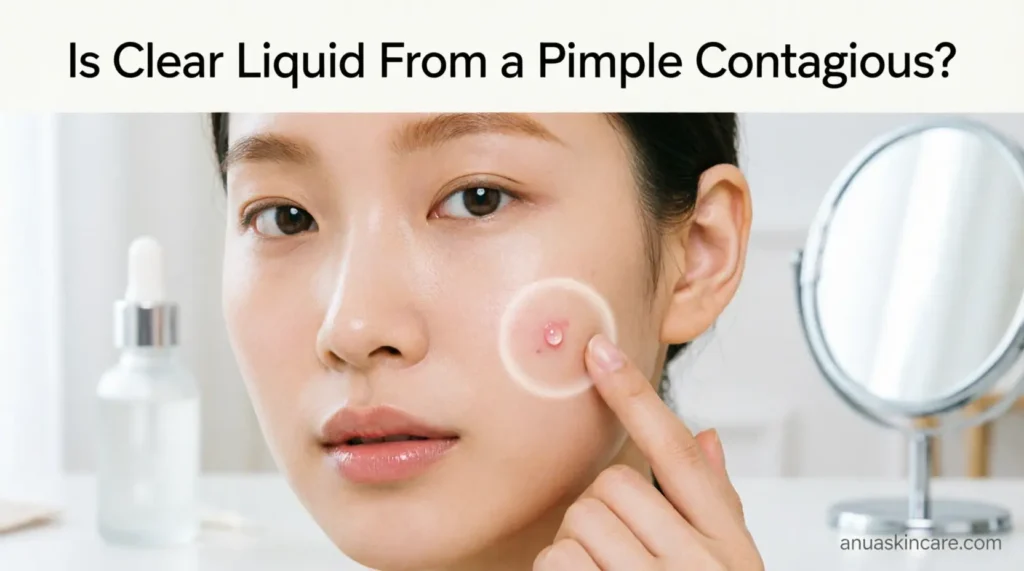
This question rarely appears in competitor articles but comes up frequently in real conversations about acne. The short answer is no — clear serous fluid from a pimple is not contagious in the way a viral infection is. You cannot pass the fluid to another person and cause them to develop acne.
However, if bacterial acne is present, the bacteria involved — primarily Cutibacterium acnes — can transfer to other areas of your own skin through touch. This is called auto-inoculation and is one reason dermatologists advise against touching active pimples with unwashed hands. Sharing pillowcases, towels, or face cloths during an active breakout increases the likelihood of spreading bacteria to new follicle sites on your own face.
How Hormones Specifically Cause Clear-Fluid Pimples
Hormonal acne is one of the most common reasons someone with otherwise clear skin develops a pimple that produces only clear liquid, yet most competitors explain this mechanism superficially.
In the days before menstruation, estrogen levels fall while progesterone and androgens rise. This hormonal shift does two specific things relevant to clear-fluid pimples. First, androgens stimulate sebaceous gland activity, causing increased sebum production that blocks follicles. Second, progesterone increases skin inflammation sensitivity, meaning the follicle mounts a stronger inflammatory response than the level of bacterial activity would typically warrant on its own.
The result is a pimple — typically along the jawline, chin, or cheeks — that is swollen, tender, and filled with interstitial serous fluid driven by inflammation rather than heavy bacterial colonisation. When pressed, only clear liquid comes out. Standard antibacterial spot treatments are less effective here because the cause is hormonal inflammation, not a bacterial infection generating pus.
What to Do When Clear Fluid Comes Out of a Pimple
The single most important action you can take when clear fluid begins draining is to stop pressing on it. Continued pressure does not clear the pimple faster. It drives inflammatory material into surrounding tissue, increases the likelihood of post-inflammatory hyperpigmentation, and creates a larger wound with a higher scarring risk.
Immediate Steps
- Stop pressing immediately the moment fluid appears and step away from the mirror.
- Cleanse gently with a mild non-stripping cleanser to remove surface bacteria from around the area without scrubbing the wound itself.
- Apply a thin layer of a gentle antiseptic ingredient such as niacinamide or low-concentration salicylic acid around the perimeter of the pimple. Avoid concentrated actives directly on broken skin.
- Cover with a hydrocolloid patch. These patches absorb excess fluid, protect the open wound from bacteria and friction, and create a moist healing environment that significantly reduces scarring risk and speeds recovery. Apply immediately after initial drainage.
What Not to Do
- Do not pick the crust that forms over the drained pimple. That crust is part of the healing process and removing it prematurely reopens the wound.
- Do not apply heavy creams, oils, or thick makeup directly over the open area as these trap bacteria inside the compromised pore.
- Do not use alcohol-based toners or high-concentration acids directly on broken skin as these cause additional damage to the already compromised follicle wall.
- Do not press on the same spot repeatedly over multiple days hoping to force further drainage. This will not resolve the pimple — it will deepen the inflammatory damage.
When Clear Pimple Fluid Signals Something More Serious
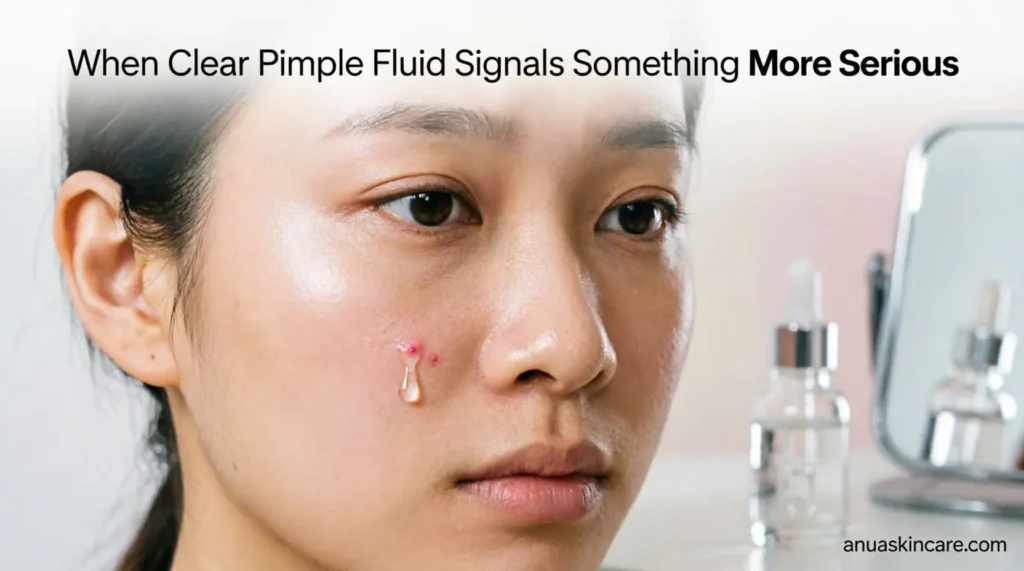
Most clear fluid from a pimple is benign and resolves within a few days with basic care. However, these specific signs indicate you should see a dermatologist.
- The skin surrounding the pimple is warm, significantly swollen, or the redness is spreading outward from the original site. This can indicate cellulitis, a bacterial infection spreading through deeper tissue layers that requires antibiotic treatment.
- The pimple is deeply embedded, extremely painful, has no visible head, and does not respond to any surface treatment. This describes a cystic or nodular acne lesion that often requires a cortisone injection or professional drainage.
- Clear fluid continues draining from the same location over several weeks without the area fully healing. This can indicate an epidermoid or pilar cyst — a deeper skin structure that refills continuously and needs surgical removal or professional drainage to resolve.
- You develop systemic symptoms alongside a severe breakout including fever, swollen lymph nodes near the face or neck, or general fatigue. These signs mean the infection may be involving deeper tissue and require immediate medical attention.
Ingredients That Help After a Pimple Has Drained Clear Fluid
Once a pimple has drained and the follicle is in recovery mode, specific ingredients support faster healing and reduce the risk of lasting marks.
For Active Inflammation
- Niacinamide: Reduces redness, supports the skin barrier, and has mild antimicrobial properties without irritating compromised skin. Safe to apply around the drained area.
- Centella asiatica (Cica): Supports wound healing and calms inflammation. Found in many post-breakout repair formulas and safe to apply directly on healing skin.
- Low-concentration salicylic acid (0.5 to 1 percent): Helps keep the pore clear during recovery without the irritation of stronger concentrations on broken skin.
For Preventing Post-Inflammatory Marks
- Azelaic acid: Reduces the pigmentation response that follows inflammation and is well-tolerated on recovering skin.
- Vitamin C: Supports collagen production and reduces oxidative stress in skin that has experienced inflammatory damage.
- Tranexamic acid: Targets hyperpigmentation pathways specifically and is suitable for sensitive or post-breakout skin.
Common Mistakes People Make When Dealing With Clear Liquid Pimples
These are the errors that extend healing time, worsen scarring, and turn a minor inflammatory episode into a much larger skin problem.
- Popping before the pimple has a head. Pressing on a pimple that has not yet formed a surface head pushes inflammatory material and bacteria into surrounding tissue, which dramatically increases the risk of a larger, more painful breakout at the same site.
- Assuming clear fluid means the pimple is safe to pop. The clear liquid is evidence of active inflammation. The follicle is not healed simply because the discharge looks watery rather than yellow or white.
- Using high-concentration acids on broken skin. Applying strong retinoids, AHAs, or high-percentage BHAs directly to a compromised follicle causes chemical irritation on top of existing inflammation.
- Skipping moisturiser because the skin feels oily. Dehydrated skin triggers increased sebum production, which worsens the conditions that cause blocked follicles. Even acne-prone skin needs appropriate hydration.
- Touching the area repeatedly throughout the day. Each touch transfers bacteria from hands to a compromised wound. A hydrocolloid patch physically blocks this behaviour and eliminates the temptation.
- Reusing pillowcases and towels during a breakout. Fabric in contact with an active breakout harbours bacteria that re-inoculate the skin every time it makes contact again.
Frequently Asked Questions
Is it normal to have a pimple with no pus, just clear liquid?
Yes, it is completely normal. A pimple with no pus and only clear liquid means the inflammation is in an early stage or is driven by hormonal factors rather than heavy bacterial infection. The clear fluid is serous fluid — a natural part of how your immune system responds to blocked follicles. It does not mean the pimple is less real, and it still requires gentle care to heal properly without scarring.
Should you pop a pimple that only has clear liquid?
No. A pimple producing only clear liquid is not ready to be extracted. There is no formed pus to release, which means pressing on it will only push inflammatory fluid into surrounding tissue, widen the follicle damage, and increase the risk of scarring and post-inflammatory hyperpigmentation. The correct action is to apply a hydrocolloid patch and leave the area undisturbed.
Why does clear fluid keep coming out of a pimple after I pop it?
Once the follicle wall is broken, your body sends a continuous supply of serous fluid to the area as part of wound healing. This is a normal immune response, not a sign that something is wrong. The fluid will gradually decrease and the area will begin crusting over as healing progresses. Applying a hydrocolloid patch absorbs this excess fluid and protects the wound while this process completes.
How long does it take for a pimple to heal after clear fluid drains?
With proper care — no further picking, a hydrocolloid patch applied promptly, and gentle cleansing — most pimples that have drained clear fluid will close and begin healing within 24 to 72 hours. A faint pink or red mark may remain for several days to weeks depending on your skin tone and how much the follicle was disturbed.
Why is my pimple filled with clear liquid?
A pimple with clear liquid usually contains skin fluid, not pus. This often happens in the early stage of Acne or when the skin is irritated. Avoid popping it and keep the area clean — it usually heals on its own in a few days.
How to stop clear pus from a pimple?
To stop clear fluid from a pimple, avoid squeezing it and keep the area clean. Apply a gentle spot treatment and use a light moisturizer to calm irritation. This type of fluid is common in early Acne and usually dries up on its own within a few days.
Conclusion
Clear liquid coming out of a pimple is not unusual, not dangerous on its own, and not a sign that something has gone wrong with your skin. It is serous fluid — the same inflammatory carrier fluid your body produces whenever tissue is under stress, whether from a blocked follicle, hormonal fluctuation, or a minor wound.
Understanding what that fluid means at each stage gives you the ability to make better decisions in the moment. Early clear fluid means the pimple has not yet matured and should not be pressed further. Post-drainage clear fluid means wound healing is underway and the priority is protecting the area, not continuing to squeeze. Persistent clear fluid over days or weeks from the same location is the signal to stop home management entirely and see a dermatologist.
The actions that consistently produce the best outcomes are the simplest ones: stop pressing the moment fluid appears, cleanse gently, and apply a hydrocolloid patch. Every additional intervention beyond that — picking, strong acids, repeated squeezing — extends healing time and increases scarring risk rather than reducing it.
Your skin is already doing the work. The most effective thing you can do is get out of its way.
You Might Also Enjoy Reading :
Skin Better AlphaRet Overnight Cream Reviews – Worth It
Taylor Frankie Paul Beauty Routine for MomTok Glow
Skincare Rutina: The Ultimate Guide for Healthy Skin