

Introduction: Why Does Your Skin Still Look Dull?
Ever wake up, look in the mirror, and think… why does my skin look tired even after a full night’s sleep?
You’re not alone. A lot of people in the U.S. deal with dullness, uneven texture, and that “meh” skin vibe no matter how many products they try.
Then you see those Korean “glass skin” results online—smooth, glowing, almost reflective skin. It honestly looks unreal. That’s where the Korean Skincare Routine comes in, known for its gentle layers and long-term results.
What Is “Glass Skin” (And Why It Works)
Glass skin isn’t about makeup. It’s about deep hydration, smooth texture, and balanced skin.
The thing is, Korean skincare isn’t focused on quick fixes. It’s about layering hydration, protecting your skin barrier, and using gentle but effective ingredients.
Here’s the simple science behind it:
Hydration = Light Reflection
Well-hydrated skin reflects light better, which gives you that glow.
Healthy Skin Barrier = Smooth Texture
When your barrier is strong, your skin feels softer and looks more even.
Active Ingredients = Long-Term Results
Ingredients like peptides, copper peptides, exosomes, and hypochlorous acid help repair, calm, and renew your skin over time.
I’ve noticed that once people stop over-stripping their skin and start focusing on hydration, everything changes.
The Korean Skincare Routine (Step-by-Step)
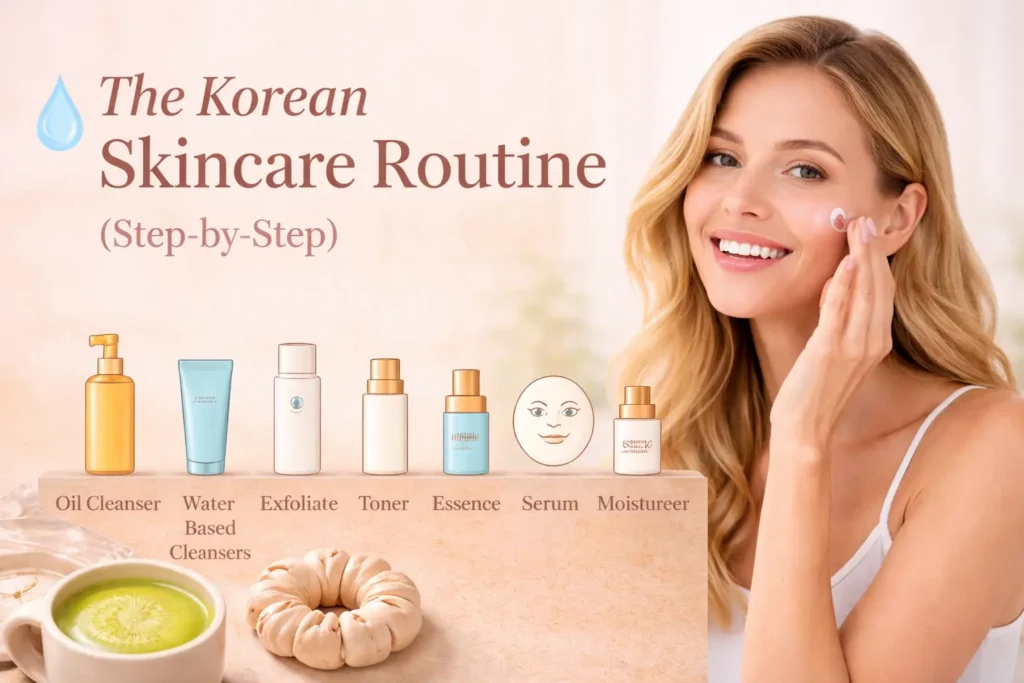
Let’s get into the real routine. Don’t worry—it’s flexible. You don’t need 10 products right away.
Oil Cleanser (PM Only)
What to do:
Use an oil-based cleanser to remove makeup, sunscreen, and excess oil.
Why it matters:
Oil dissolves oil. It cleans deeply without drying your skin.
Pro Tip:
Massage it on dry skin for at least 60 seconds. This helps unclog pores and smooth texture.
Water-Based Cleanser
What to do:
Follow up with a gentle foaming or gel cleanser.
Why it matters:
This removes sweat, dirt, and leftover residue.
Pro Tip:
If your skin feels tight after washing, your cleanser is too harsh.
Exfoliation (2–3 Times a Week)
What to do:
Use a chemical exfoliant like AHA, BHA, or PHA.
Why it matters:
It removes dead skin cells and makes your skin smoother and brighter.
Pro Tip:
If you’re new, start with PHA. It’s gentle and great for sensitive skin.
Toner (Hydration Layer #1)
What to do:
Apply a hydrating toner using your hands or a cotton pad.
Why it matters:
It preps your skin to absorb the next steps better.
Pro Tip:
Try the “7-skin method.” Apply toner in thin layers 3–7 times for deeper hydration.
Essence (The Secret Weapon)
What to do:
Gently pat a lightweight essence into your skin.
Why it matters:
Essences hydrate deeper and improve texture over time.
Pro Tip:
Look for fermented extracts or exosomes for better glow and skin renewal.
Serum (Targeted Treatment)
What to do:
Apply a serum based on your skin concern.
Why it matters:
This is where real improvement happens.
Popular ingredients:
Peptides: Help build collagen for firmer skin
Copper peptides: Repair and strengthen skin
Hypochlorous acid: Calms redness and fights bacteria
Niacinamide: Brightens and controls oil
Pro Tip:
Don’t overload your routine. Stick to one or two active ingredients at a time.
Sheet Mask (2–3 Times Weekly)
What to do:
Use a sheet mask after serum.
Why it matters:
It boosts hydration and gives your skin an instant glow.
Pro Tip:
Keep your sheet mask in the fridge for a cooling effect.
Eye Cream
What to do:
Apply gently around your eyes.
Why it matters:
The skin here is thinner and needs extra care.
Pro Tip:
Use your ring finger to avoid applying too much pressure.
Moisturizer (Seal Everything In)
What to do:
Apply a cream or gel moisturizer.
Why it matters:
It locks in all the hydration layers.
Pro Tip:
Choose products with ceramides and peptides for better repair and glow.
Sunscreen (AM Only, Non-Negotiable)
What to do:
Apply SPF 30 or higher every morning.
Why it matters:
Without sunscreen, you won’t get glass skin. Sun damage ruins progress.
Pro Tip:
Reapply every 2–3 hours if you’re outside.
Common Mistakes People Make
Let’s be honest—this is where most people mess up.
- Using too many products at once
Your skin gets overwhelmed - Skipping sunscreen
This cancels all your progress - Over-exfoliating
More isn’t better—it damages your skin barrier - Ignoring hydration
Glass skin depends on hydration - Switching products too quickly
Give your routine at least 3–4 weeks
How to Choose Products for Your Skin Type

Not every routine works the same for everyone. Here’s how to adjust yours.
Oily Skin
Use lightweight gel cleansers
Go for niacinamide and hypochlorous acid
Choose oil-free moisturizers
Avoid heavy creams.
Dry Skin
Focus on hydration layers like toner and essence
Use thicker moisturizers with ceramides
Add peptides for repair
Avoid harsh exfoliants.
Sensitive Skin
Keep your routine simple
Use fragrance-free products
Look for calming ingredients like centella and hypochlorous acid
Avoid mixing too many actives.
Real-Life Results: What to Expect
Let’s keep expectations realistic.
After 1 Week
Skin feels softer
Slight hydration boost
Less dryness
After 4 Weeks
Visible glow
Smoother texture
Fewer breakouts if consistent
After 3 Months
Noticeable glass skin effect
Even skin tone
Strong and healthy skin barrier
I’ve seen this many times—consistency really does make the biggest difference.
Final Thoughts: Keep It Simple, Stay Consistent
Here’s the truth most people don’t say.
You don’t need a 10-step routine to start.
Start simple. Build slowly. Pay attention to your skin.
Glass skin isn’t about perfection. It’s about healthy, hydrated skin that naturally glows.
Take it one step at a time. Stay consistent. Trust the process.
How long does it take to get glass skin?
It depends on your skin type and consistency. Most people start noticing a healthy glow within 3–4 weeks. Real glass skin results usually take around 2–3 months of a consistent routine
Do I really need all 10 steps for glass skin?
Not at all. That’s a common myth. You can start with just 4–5 basic steps—cleanser, toner, serum, moisturizer, and sunscreen. The extra steps simply enhance results over time.
Can oily skin achieve glass skin?
Yes, absolutely. In fact, oily skin can look even more radiant when properly hydrated. The key is using lightweight, non-greasy products like gel moisturizers and niacinamide-based serums.
Is Korean skincare suitable for sensitive skin?
Yes, but you need to be careful with product selection. Stick to gentle, fragrance-free formulas and avoid mixing too many active ingredients. Ingredients like centella and hypochlorous acid work really well for calming sensitive skin.
What is the most important step in this routine?
If I had to pick one, it would be sunscreen. You can use the best products in the world, but without daily SPF, your skin won’t improve long term. It protects your glow and prevents damage.
Conclusion
So here’s the simple truth—getting that glass skin glow isn’t about chasing trends or buying every product you see online.
It really comes down to consistency, hydration, and treating your skin gently.
The thing is, most people give up too early or try too much at once. But when you slow down, stick to a routine, and focus on what your skin actually needs, the results start to show.
Will it happen overnight? No.
Will it be worth it? Absolutely.
Start small. Stay consistent. And give your skin time to respond.
Because at the end of the day, glass skin isn’t about perfection—it’s about healthy, balanced skin that naturally glows