
introduction
Your skin felt smooth for a day. Maybe two. Then it turned on you.
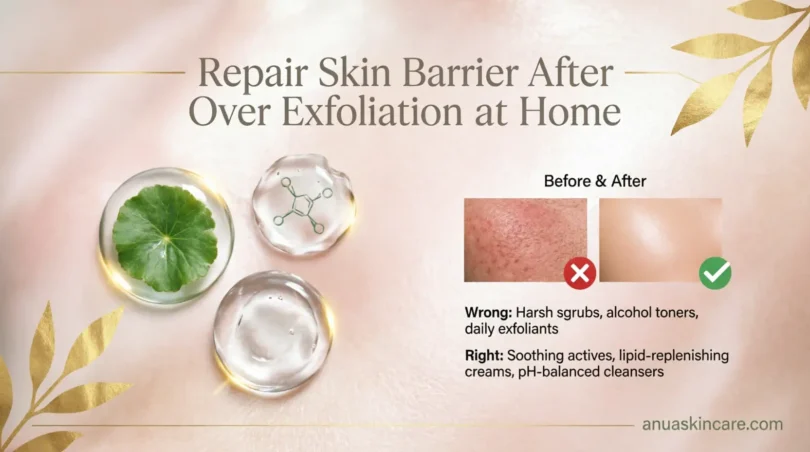
Suddenly it burns when you apply your moisturizer. Your foundation sits in patches. Your pores look twice their size, and no matter how much product you layer on, your face just feels raw, tight, and angry. If this sounds familiar, your skin barrier may be damaged — and learning how to repair skin barrier after over exfoliation at home is now essential to bring your skin back to normal
That is not your skin failing you. That is your skin asking you to stop.
Over-exfoliation is one of the most common skincare mistakes, and ironically, it happens to people who care deeply about their skin. The good news is that you can repair a damaged skin barrier at home without a dermatologist visit in most cases. But it requires patience, the right ingredients, and knowing what to put down just as much as what to pick up.
This guide covers everything from recognizing damaged skin barrier symptoms to rebuilding your routine step by step, with a realistic recovery timeline and the exact products and ingredients that actually work.
What Your Skin Barrier Actually Is and Why It Matters
Before fixing something, it helps to understand what broke.
Your skin barrier, technically called the stratum corneum, is the outermost layer of your skin. It is made up of dead skin cells held together by lipids including ceramides, fatty acids, and cholesterol. Think of it like a brick wall. The cells are the bricks and the lipids are the mortar.
This layer does two critical jobs. It keeps moisture locked inside and keeps irritants, bacteria, and environmental damage locked out. When it is intact, your skin stays hydrated, calm, and resilient.
When you over-exfoliate, you literally strip away that mortar. The bricks crumble. Moisture escapes. Irritants get in. And your skin has no defense left.
The stratum corneum is only 10 to 30 cell layers thick. It does not take much to damage it, especially if you are using chemical exfoliants like AHAs and BHAs alongside physical scrubs or retinol.
Damaged Skin Barrier Symptoms You Should Not Ignore
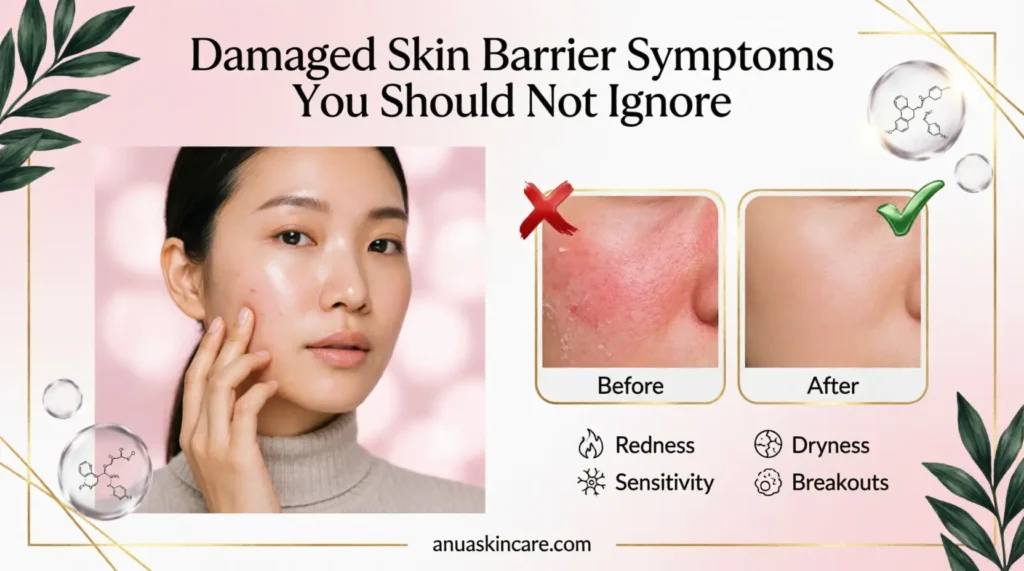
Knowing whether your skin barrier is compromised is the first step toward healing it. These symptoms often come on gradually, which is why so many people push through them thinking their skin just needs time to adjust.
- Stinging or burning when applying serums, toners, or even plain water
- Redness and blotchiness that was not there before
- Skin that looks shiny or waxy in a way that feels wrong
- Tightness or a feeling of pulling after cleansing
- Flakiness, peeling, or rough texture despite moisturizing
- Random breakouts, especially small inflamed bumps
- Increased sensitivity to the sun or wind
- Pores that appear suddenly larger or more visible
- Products that used to work now causing irritation
If you are experiencing three or more of these symptoms, your barrier is likely compromised and needs immediate attention, not more actives.
The Main Causes of Over Exfoliation
Understanding how this happened helps prevent it from happening again.
Using too many actives at once is the most common cause. Glycolic acid in the morning, salicylic acid toner at night, retinol three times a week, and a weekly at-home peel adds up faster than most people realize.
Daily exfoliation removes the protective layer faster than skin can regenerate it. Most skin types only need one to two times per week at most.
Combining physical and chemical exfoliation in the same routine multiplies the damage significantly.
Assuming more is better when starting a new product. Skin needs time to adjust to active ingredients, and overloading it at the beginning is one of the fastest ways to compromise the barrier.
How to Fix Over Exfoliated Skin Naturally: The First 48 Hours
The moment you recognize the signs, the clock starts on recovery. What you do in the first 48 hours sets the tone for how quickly you heal.
Stop everything active immediately. This means:
- Retinoids and retinol
- AHAs including glycolic acid, lactic acid, and mandelic acid
- BHAs including salicylic acid
- Physical scrubs and konjac sponges
- Vitamin C in high concentrations
- Exfoliating toners
- Clay masks used daily
- Alcohol-based toners and astringents
- Fragrance-heavy products
- Essential oils
Your only job right now is to stop the damage from getting worse. Adding more actives trying to fix the texture will only deepen the inflammation.
Wash your face once a day with the coolest water you can tolerate. Hot water further strips lipids from an already weakened barrier. Use nothing on your skin except a gentle cream cleanser and a fragrance-free moisturizer for the first two to three days.
The Complete Skin Barrier Repair Routine for Sensitive and Compromised Skin
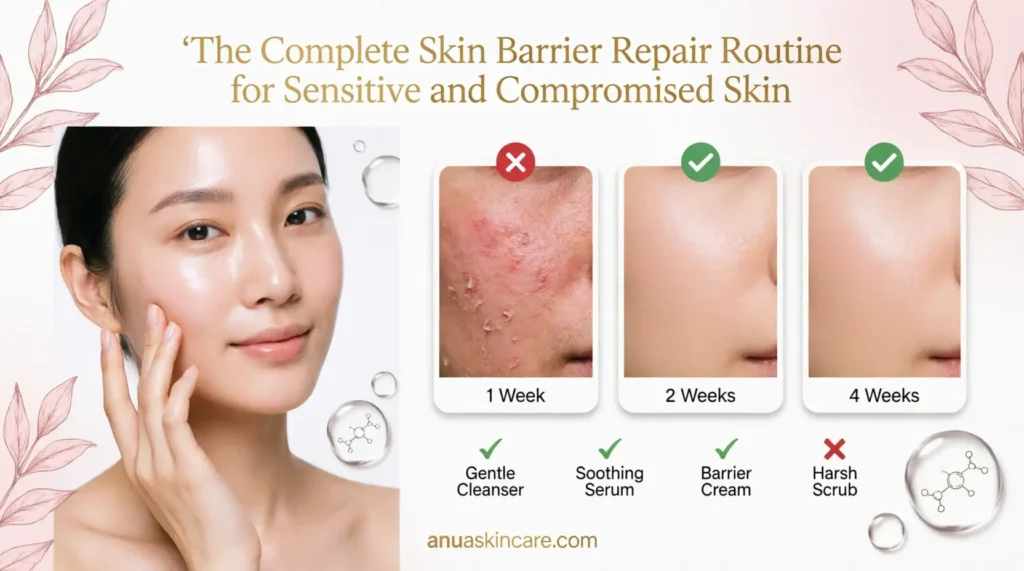
Once you have hit pause on actives, you can build a proper repair routine. This should stay in place for a minimum of four weeks and ideally six to eight weeks before you consider reintroducing anything.
Morning Routine for Damaged Skin Barrier
Rinse with cool water only or use a gentle, non-foaming cream cleanser. Avoid sulfates entirely during this phase.
Apply a hydrating toner or essence with ingredients like panthenol, allantoin, or beta-glucan. These are not exfoliating toners. Look for the word soothing or calming on the label, not brightening or resurfacing.
Layer a hydrating serum with hyaluronic acid. Apply it to slightly damp skin and follow immediately with moisturizer to seal it in. Hyaluronic acid needs moisture in the skin to pull from, otherwise it draws moisture upward and increases dryness.
Use a rich ceramide moisturizer. Ceramides are the most important ingredient for skin barrier repair. They are the lipids your barrier is literally made from. Look for formulas that combine ceramides with cholesterol and fatty acids for the most complete repair.
Finish with mineral sunscreen SPF 30 or higher. Over-exfoliated skin has lost some of its natural UV protection. This is non-negotiable. A mineral formula with zinc oxide is gentler on a compromised barrier than a chemical sunscreen.
Evening Routine to Restore Skin Barrier Overnight at Home
Double cleanse only if you are wearing sunscreen or makeup. Use a gentle oil-based cleanser first followed by a cream cleanser. Keep it minimal.
Apply a barrier-focused serum with niacinamide. Niacinamide at 5 to 10 percent helps regulate oil production, reduce redness, and support ceramide synthesis in the skin. It is one of the most powerful ingredients for compromised skin.
Use a rich occlusive moisturizer. At night your skin goes into repair mode and an occlusive formula creates a seal that prevents transepidermal water loss while you sleep. Ingredients like shea butter, squalane, and plant oils work well here.
Consider a sleeping mask two to three nights a week. Products with ingredients like centella asiatica, madecassoside, or beta-glucan provide an extra layer of repair support overnight.
If your skin is severely damaged and feels raw or exposed, a thin layer of plain petroleum jelly over your moisturizer creates a physical barrier that prevents moisture loss and keeps irritants out while the deeper layers heal.
Key Ingredients That Repair a Damaged Skin Barrier Fast at Home
Not all soothing ingredients are equal. These are the ones with the most evidence behind them for barrier repair.
Ceramides replace the lipids stripped from the barrier. They are the most structurally important ingredient for repair and should be the foundation of any recovery routine.
Niacinamide supports ceramide production from within the skin, reduces inflammation, and calms redness without irritating compromised skin. It is gentle enough to use even on severely damaged skin.
Hyaluronic acid draws water into the skin to counteract dehydration caused by barrier damage. Always follow with an occlusive to prevent moisture from evaporating.
Panthenol (Vitamin B5) accelerates wound healing, improves skin elasticity, and has anti-inflammatory properties that help soothe red, reactive skin.
Centella asiatica (Cica) is a plant extract widely used in Korean skincare for barrier repair. It promotes collagen synthesis and has significant calming and healing properties.
Allantoin soothes irritation and supports skin cell regeneration. It is extremely gentle and well tolerated by even the most sensitive skin.
Colloidal oatmeal has an FDA-approved status as a skin protectant. It reduces itching, redness, and irritation and is excellent for severely reactive skin.
Beta-glucan is one of the most effective ingredients for calming inflamed skin and has been shown to support the skin’s natural healing processes.
Ingredients to Avoid Until Your Skin Barrier Has Fully Healed
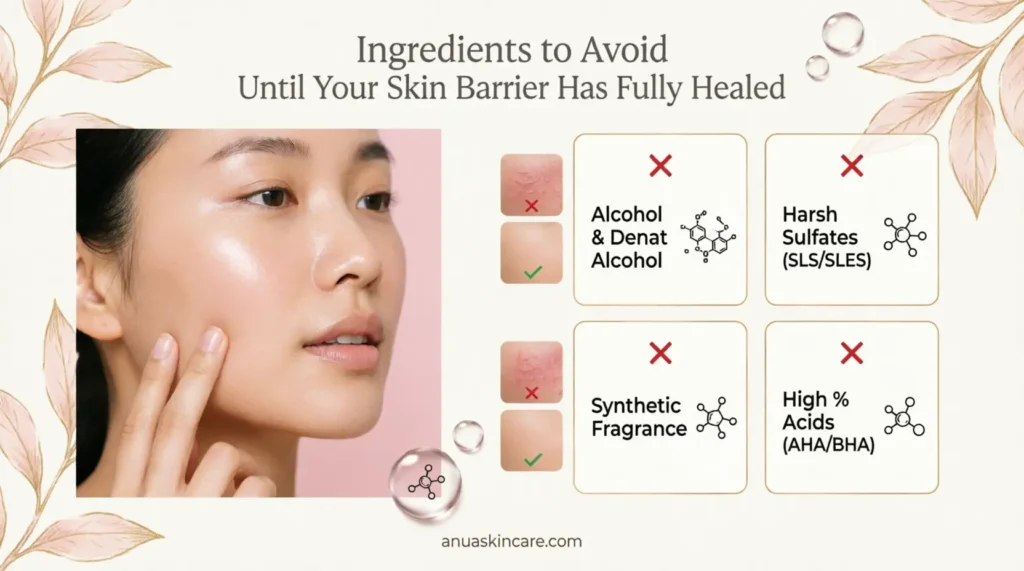
During recovery your skin is vulnerable in ways it normally is not. Products that would ordinarily be fine can cause significant irritation on a compromised barrier.
- All forms of exfoliating acids including glycolic, lactic, salicylic, mandelic, and malic acid
- Retinol and all retinoids
- High-concentration vitamin C especially ascorbic acid in concentrations above 10 percent
- Benzoyl peroxide
- Alcohol denat and denatured alcohol
- Synthetic fragrance and parfum
- Essential oils including tea tree, lavender, and eucalyptus
- Witch hazel
- Menthol and camphor
- Exfoliating enzymes from papaya or pineapple
Ingredient Comparison: What Helps vs What Hurts During Barrier Repair
| Ingredient | Role in Recovery | Safe During Repair | Notes |
|---|---|---|---|
| Ceramides | Rebuilds lipid barrier | Yes | Foundation of repair |
| Niacinamide | Calms redness, boosts ceramides | Yes | Use at 5-10% |
| Hyaluronic Acid | Restores hydration | Yes | Apply to damp skin |
| Panthenol | Accelerates healing | Yes | Very gentle |
| Centella Asiatica | Anti-inflammatory, collagen support | Yes | Excellent for repair phase |
| Glycolic Acid | Exfoliates | No | Avoid until healed |
| Retinol | Cell turnover | No | Reintroduce slowly after healing |
| Salicylic Acid | Unclogs pores | No | Avoid during recovery |
| Synthetic Fragrance | None | No | Irritates compromised skin |
| Vitamin C (ascorbic) | Antioxidant, brightening | Avoid high % | Can sting damaged skin |
| Colloidal Oatmeal | Soothes and protects | Yes | Ideal for reactive skin |
| Squalane | Lightweight moisture | Yes | Mimics skin’s natural oils |
How Long Does It Take to Repair a Damaged Skin Barrier
Recovery time depends on how severely your barrier was damaged and how consistently you follow a repair routine. This is one of the most common questions and it deserves an honest answer.
Mild damage caused by a week or two of daily exfoliation typically resolves in two to four weeks with a consistent, gentle routine.
Moderate damage from stacking multiple actives over several weeks can take four to eight weeks. You may see significant improvement before full recovery, but sticking with the repair routine until symptoms fully resolve is important.
Severe or chronic damage from months of aggressive exfoliation or repeated at-home peels can take three to six months. In some cases where collagen around the pores has been structurally affected, professional treatments may be needed to complete the recovery.
The most important thing to understand is that recovery is not linear. Your skin may look better on day ten, then have a rough patch on day fifteen. This is normal. It does not mean your routine is failing.
Diet and Internal Support for Skin Barrier Recovery
This is a section most skincare articles skip, but what you eat directly affects how quickly and effectively your skin barrier heals.
Omega-3 fatty acids found in fatty fish, flaxseed, and walnuts support the lipid matrix of the skin barrier. Adding omega-3 rich foods or a quality supplement during recovery can noticeably speed up healing.
Zinc plays a critical role in wound healing and skin regeneration. Pumpkin seeds, chickpeas, and cashews are good sources.
Vitamin E is a fat-soluble antioxidant that protects cell membranes and supports barrier function. Sunflower seeds, almonds, and avocado are high in vitamin E.
Collagen-supporting foods rich in vitamin C from whole food sources (not supplements that irritate the skin) help maintain structural integrity around pores and follicles.
Hydration matters more during barrier damage than at any other time. When the barrier is compromised, transepidermal water loss increases. Drinking adequate water supports the skin’s ability to hold on to moisture from the inside out.
Avoiding inflammatory foods during recovery, including high sugar, alcohol, and processed foods, reduces systemic inflammation that can slow skin healing.
Lifestyle Adjustments That Speed Up Skin Barrier Repair
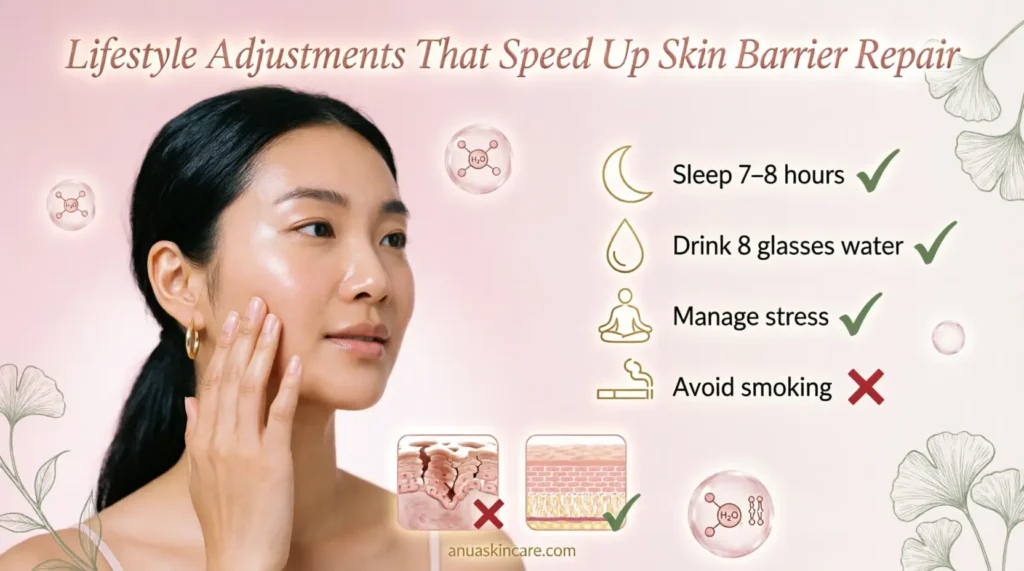
Skincare products alone will not repair your barrier if your daily habits are working against you.
Switch to a silk or satin pillowcase. Cotton creates friction against sensitive skin and can absorb moisture from your moisturizer during the night.
Avoid hot showers and steam rooms. Heat strips moisture and lipids from the skin. Cool to lukewarm water only during the recovery period.
Keep your hands off your face. Touching, picking, or rubbing irritated skin introduces bacteria and prevents healing. Resist the urge to inspect your skin up close multiple times a day.
Simplify your routine to three steps maximum. Cleanser, moisturizer, and SPF. More steps mean more ingredients and more opportunity for irritation.
Avoid heavy workouts that create excessive sweat for the first week or two. Sweat is acidic and can sting and irritate a compromised barrier.
Change your pillowcase every two to three days. Bacteria and oils accumulate on fabric and can trigger breakouts on skin that is already vulnerable.
How to Reintroduce Exfoliation After Your Skin Has Healed
Once your skin has returned to baseline with no redness, burning, sensitivity, or flaking, you can begin reintroducing actives slowly and carefully.
Wait until you have had at least two to three weeks of no symptoms before trying anything new.
Start with the gentlest form of exfoliation available. Polyhydroxy acids (PHAs) like gluconolactone are the most gentle exfoliants and are an excellent first step back. They exfoliate more slowly than AHAs and have built-in humectant properties.
Use exfoliants once a week only for the first month back. Watch how your skin responds for 48 hours after each use before deciding whether to continue.
Never combine exfoliants. Use one product on one night and nothing else active. No retinol on the same night. No vitamin C the following morning.
Introduce retinol last and at the lowest possible strength. Start with a retinol concentration of 0.025 percent and use it once a week. Your skin should be fully stable for at least six weeks before you consider this step.
When to See a Dermatologist
Most cases of over-exfoliation heal fully with a consistent at-home routine. However, there are situations where professional guidance is necessary.
Seek a professional opinion if your skin is not improving after six to eight weeks of a strict repair routine, if you are experiencing severe peeling that looks like a wound, if you have significant scarring or textural changes that seem permanent, or if breakouts have worsened significantly and are leaving marks.
A dermatologist can prescribe barrier repair creams with prescription-strength ingredients, recommend treatments like LED light therapy or medical-grade hydration facials, and assess whether collagen stimulating treatments are appropriate for structural damage.
Frequently Asked Questions
How do I know if my skin barrier is damaged or just dry?
Dry skin usually responds well to moisturizer and does not sting when you apply products. A damaged barrier stings or burns even with gentle products, looks shiny or raw, and does not improve with regular moisturizer use alone. Multiple symptoms appearing together, especially stinging and redness, point to barrier damage rather than simple dryness.
Can I wear makeup while my skin barrier is healing?
Ideally, minimize makeup during the repair phase especially foundations and products with fragrance, alcohol, or silicones that may block healing. If you need to wear it, use a tinted mineral sunscreen as a base and choose fragrance-free, minimal ingredient formulas. Always remove makeup gently without rubbing.
Is it normal to break out more while repairing the skin barrier?
Yes. When the barrier is compromised, bacteria penetrate more easily and oil production increases as the skin tries to compensate for moisture loss. These breakouts typically reduce as the barrier heals. Resist the urge to use spot treatments with salicylic acid or benzoyl peroxide during this phase.
Can I use vitamin C while repairing my skin barrier?
High-concentration ascorbic acid formulas are best avoided during active recovery as they can sting and irritate compromised skin. If you want antioxidant support, look for gentler vitamin C derivatives like ascorbyl glucoside or sodium ascorbyl phosphate in lower concentrations, or wait until the barrier has healed.
Does drinking more water help repair the skin barrier?
Adequate hydration supports overall skin health and can help the skin hold moisture more effectively. However, drinking large amounts of water will not reverse barrier damage on its own. Internal hydration works alongside topical barrier repair, not instead of it.
How often should I moisturize during barrier repair?
Apply moisturizer morning and night as a minimum. If your skin feels tight or dry during the day, a third application of a simple fragrance-free moisturizer is appropriate. Over-moisturizing is not a concern when your barrier is compromised.
Can aloe vera help repair a damaged skin barrier?
Pure aloe vera gel has anti-inflammatory properties and can soothe red, irritated skin. It works well as a temporary calming treatment. However, it should not replace a ceramide-based moisturizer as it does not contain the lipids needed to structurally repair the barrier.
Is it safe to use niacinamide on very irritated skin?
Niacinamide is one of the few active ingredients gentle enough to use on compromised skin. At 5 to 10 percent it reduces redness and supports ceramide production without causing additional irritation. However, if your skin is severely raw, start at a lower concentration and patch test first.
The Honest Truth About Skin Barrier Recovery
Here is what nobody tells you when your skin is at its worst: healing is boring.
The most effective skin barrier repair routine is the least exciting one. Two products. Three steps. No new launches. No experimentation. Just ceramides, a gentle cleanser, and SPF. Every single day. For weeks.
This is genuinely hard when you are used to an eight-step routine and you are staring at your skin looking for signs of progress. But every time you layer on a new product trying to speed things up, you risk setting yourself back.
The skin knows how to heal. Your barrier has been doing this work since you were born. What it needs from you now is less, not more.
Give it the right conditions and it will come back. And when it does, and you rebuild your routine thoughtfully with one active at a time, one day at a time, the results you originally wanted will actually show up and stay.
Your skin is not broken. It is just asking for a different kind of care.